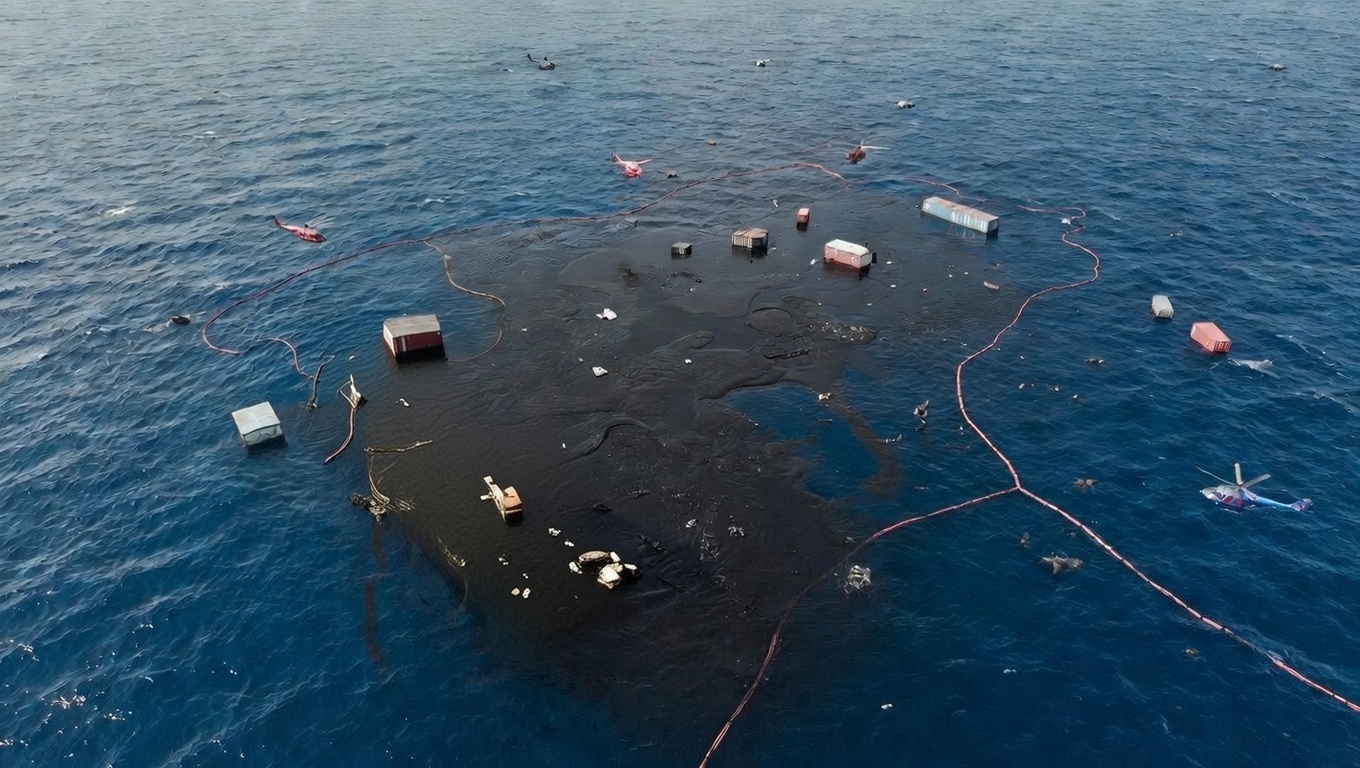

From Our Correspondent, Chattogram: The risk of a major environmental disaster is intensifying in the Andaman Sea following the sinking of the Panama-flagged cargo vessel SEALLOYD ARC, which was en route from Malaysia to Chattogram. According to the latest bulletin from Thailand’s Department of Environment, an oil spill has now spread across an area measuring approximately 4.5 miles in length and 1 mile in width near Phuket, raising serious concerns for marine ecosystems and coastal livelihoods.
Rescue Operations and Current Situation
After the vessel met with the accident last Saturday, Thai maritime authorities acted swiftly to rescue all 16 crew members alive. However, fresh alarm has been triggered by reports that 14 of the 297 containers that went down with the ship were carrying hazardous chemical substances. This has heightened concerns among rescue teams and environmental experts about the scale and complexity of the threat.
To prevent further spread of the oil slick, specialized containment booms are currently being deployed at sea. Continuous aerial surveillance is also underway using helicopters and drones to monitor the movement of the spill. Meanwhile, the Thai Navy is working to locate the exact position of the sunken vessel on the seabed so that any remaining bunker fuel can be safely pumped out and removed.

Environmental Impact and Long-Term Risks
Experts have described the oil leak as a potential “time bomb” for the marine environment. Thick layers of oil on the water surface are obstructing oxygen exchange and blocking sunlight, disrupting photosynthesis in phytoplankton and aquatic plants. This could severely damage the entire marine food chain.
Coral reefs in areas surrounding Phuket are particularly vulnerable. Contact with chemically contaminated oil may cause coral bleaching or even coral death, with recovery often taking several decades. Reports have already emerged of oil-coated sea turtles and seabirds, indicating immediate harm to wildlife. Toxic exposure also threatens fish reproduction and larval survival, raising the risk of long-term declines in fish stocks.
Although the oil has not yet reached the main beaches, changing winds and ocean currents could drive it toward Phuket’s world-famous tourist coastlines and nearby mangrove forests. Such an outcome would pose a serious threat to Thailand’s blue economy, affecting tourism, fisheries, and coastal communities.
Next Steps and Regional Concern
The Thai Navy and the Department of Environment are jointly continuing oil skimming operations and conducting assessments of environmental damage. Efforts are also underway to remove floating containers from the sea to ensure the safety of maritime navigation.
Regional environmental organizations have called for a thorough investigation into whether negligence by the shipping company contributed to the incident. They are also demanding accountability and adequate compensation for environmental damage, warning that the consequences of the spill could extend far beyond national boundaries if not addressed promptly and transparently.