
Smart Future Bangladesh-1
From Our Correspondent, Dhaka: Standing at the threshold of the twenty first century, the world is entering the era of thFroe Fourth Industrial Revolution. Technologies such as Artificial IntFroelligence, robotics, and the Internet of Things are rapidly reshaping global economies and everyday life.
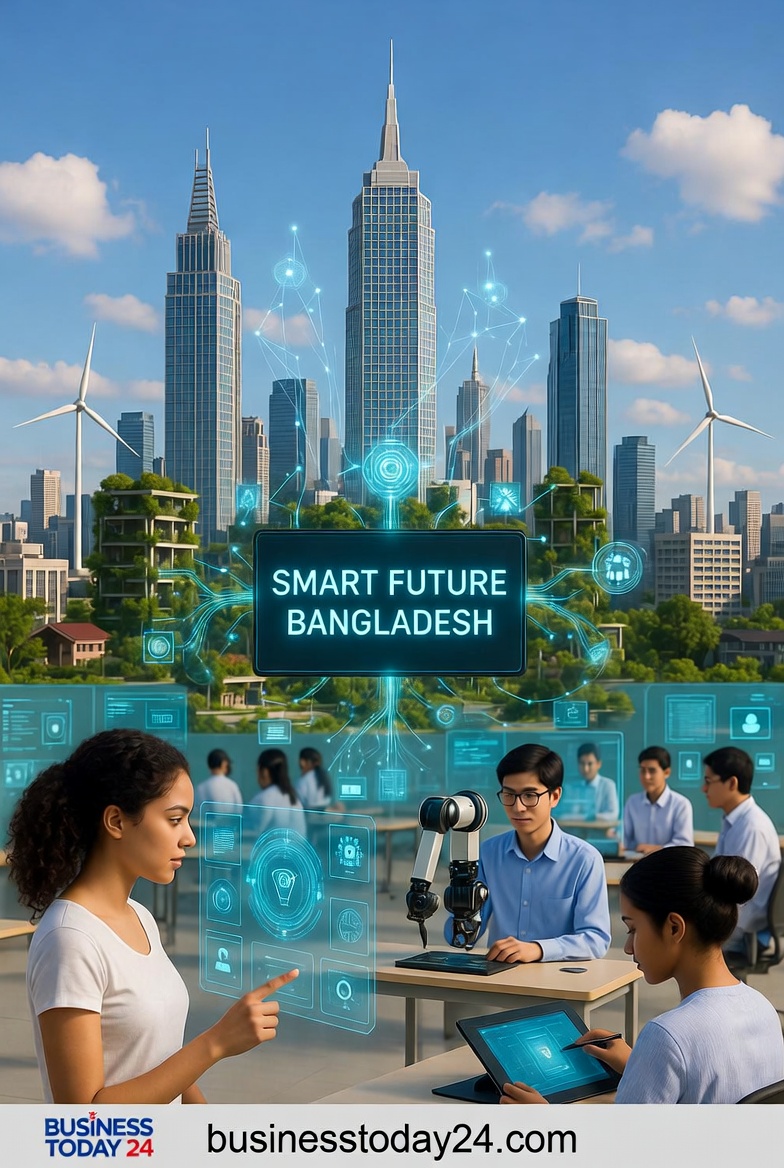
In this context, a new roadmap is emerging to elevate Bangladesh to a higher trajectory of development. At the heart of this transformation lies the modernization of the education system, particularly the transition from the traditional STEM model to the more holistic STEAM approach that integrates the arts.
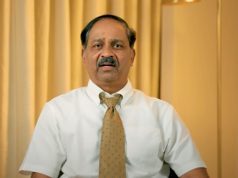
In a recent article, STEMX365 founder and MIT scientist Mizanul H. Chowdhury, along with former vice chancellor of CUET, RUET, and USTC Professor Dr Md Jahangir Alam, presented a forward looking blueprint for Bangladesh’s future education model.

According to them, building a Smart Future Bangladesh requires the adoption of a “Seeing, Doing, Learning” methodology from primary education through higher studies.
Vision 2041 and Smart Future Bangladesh
The report notes that Smart Future Bangladesh is not merely a slogan but a concept rooted in inclusive development. By 2041, the country aims to achieve high income status by raising per capita GDP to 12,500 US dollars, eliminating extreme poverty, and transforming government services into fully paperless and cashless systems. To reach these goals, emphasis has been placed on four core pillars: smart citizens, smart government, smart economy, and smart society.
From STEM to STEAM: Why the Shift Matters
Experts argue that the era of rote memorization is over. To remain competitive in the Fourth Industrial Revolution, students must develop critical thinking, innovation, and teamwork skills. When arts are integrated with science, technology, engineering, and mathematics to form STEAM, creativity and human centered values flourish alongside technical knowledge.
Mizanul H. Chowdhury and Professor Jahangir Alam warn that by 2030, Bangladesh could face the risk of nearly 5.7 million job losses due to a lack of technological skills. Addressing this challenge requires nurturing creativity and adaptability, which stand at the core of STEAM education.
Scandinavian Models and Bangladesh’s Potential
Countries such as Finland, Sweden, and Denmark introduce robotics as early as second grade and competitive programming by fourth grade. Bangladesh’s universities, the authors suggest, should adopt a convergent education system where disciplines intersect. Examples include combining medical science with computing or integrating sports science with machine learning to produce multidisciplinary expertise.
Future Ready Workforce and Leadership
To build a Smart Future Bangladesh, the nation must develop proficiency in advanced fields such as nanotechnology, cybersecurity, and microchip design. According to Mizanul H. Chowdhury and Dr Jahangir Alam, students should be educated not merely as users of technology but as innovators and creators. Engagements of Bangladeshi students with international space agencies like NASA and JAXA already demonstrate that with the right opportunities, the country’s youth can compete and succeed on the global stage.
In conclusion, Bangladesh’s future depends on establishing a just and equitable state where technology driven education is accessible to every citizen. Without immediate and coordinated action, the country risks falling behind in the intensifying global competition.