
Silent Epidemic: 1 in 5 Rural Bangladeshis Suffer from Hypertension
Health Desk: Non-communicable diseases (NCDs) have emerged as a terrifying “silent epidemic” in rural Bangladesh, moving far beyond mere statistics. While hypertension and diabetes were once considered urban lifestyle diseases, a vast portion of the rural population now unknowingly carries these life-threatening conditions. A recent study published in the international medical journal Clinical Epidemiology and Global Health has highlighted this alarming reality.
Alarming Research Findings
Conducted in the Chatmohar upazila of Pabna and Birol upazila of Dinajpur, the study reveals that approximately 20.3% of the rural population suffers from hypertension. This means one in every five villagers is affected. Additionally, 8.6% of the population has diabetes, and 3.7% suffer from chronic kidney disease (CKD).
The most concerning aspect is that the majority of those affected were unaware of their illness. The research shows that in over half (53%) of those with diabetes, the disease has already reached a complicated stage. Due to a lack of timely detection, this large population faces extreme health risks, including heart disease, stroke, and kidney failure.
The ‘One Dollar Screening’ Model
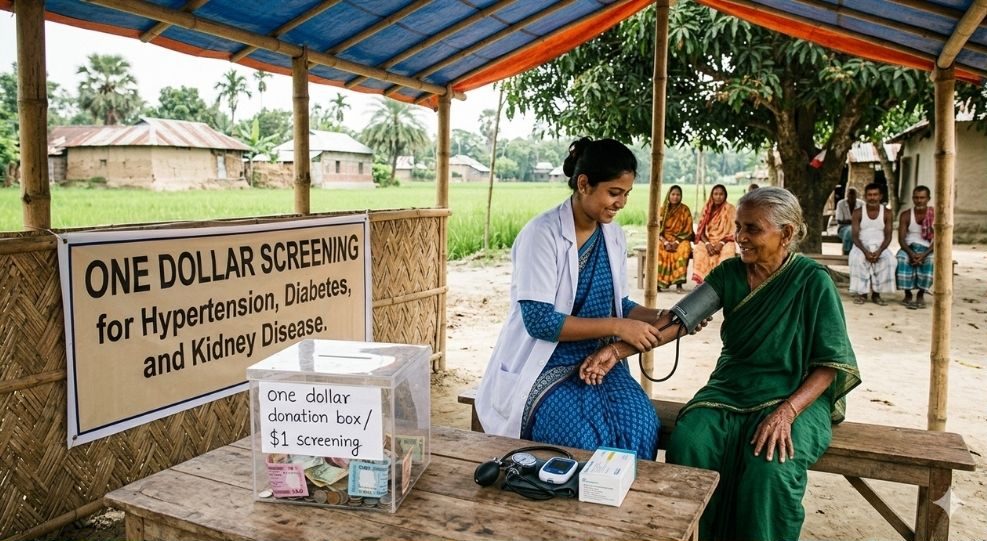
Led by Dr. Ahmed Sharif, a Melbourne-based physician and researcher, the study proposes a cost-effective solution called the “One Dollar Screening” model. This method allows for the detection of hypertension, diabetes, and kidney disease for just $1 per person.
The research was a joint initiative by the voluntary organization “Alternative Approach” and Australia’s “Seba,” featuring experts from various universities in the United States and Australia. Researchers noted that because many patients were asymptomatic, they had never undergone testing. Excessive salt intake and obesity were identified as primary drivers of these rising health issues.
A Glimmer of Hope and Policy Recommendations
The study uncovered a surprising find: while the average rate of kidney disease in the subcontinent ranges from 17% to 24%, it was only 3.7% in these two upazilas. Similar low rates have been observed in eastern districts of Nepal. Experts believe further large-scale research is needed to determine if geographical or lifestyle factors contribute to this lower prevalence.
Dr. Ahmed Sharif emphasized that integrating this low-cost screening model into primary healthcare could significantly reduce premature deaths and disabilities. This approach would not only save medical costs for the general public but also alleviate the healthcare burden on the state. To protect rural communities from these silent killers, community-based screening and increased awareness are now a matter of urgency.