
From Our Correspondent, CHATTOGRAM: The ongoing security crisis in the Red Sea has begun to significantly disrupt global shipping routes, creating a sharp rise in “blank sailings” and triggering a shortage of vessels across major Asian export hubs.
The situation is increasingly affecting global supply chains and raising concerns among exporters.
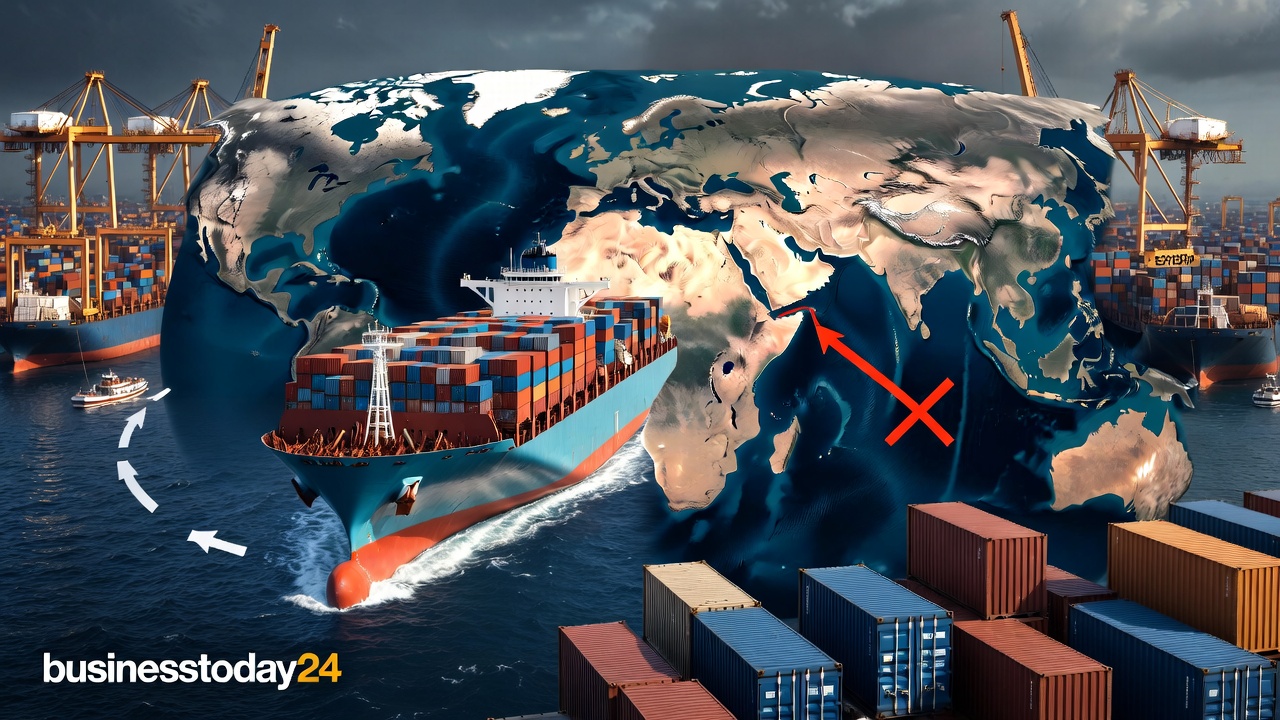
Since the beginning of 2026, geopolitical tensions in the region have forced many of the world’s largest shipping companies to avoid the traditional trade corridor through the Suez Canal and the Strait of Hormuz. Instead, vessels are being rerouted around the much longer passage via the Cape of Good Hope at the southern tip of Africa.

As a result, transit times between Asia and Europe have increased by approximately 10 to 14 days.
Shipping analysts say the extended travel time is severely disrupting vessel schedules. Normally, container ships operate on carefully planned rotation cycles between Asia and Europe. However, with longer routes and unpredictable transit times, many vessels are unable to return to Asian ports on schedule.
When a scheduled voyage is cancelled or a ship fails to arrive at its designated port on time, the shipping industry refers to the situation as a “blank sailing.” In recent weeks, the frequency of such cancellations has risen sharply, creating a shortage of available vessels in key export regions.
Major ports across Asia are already feeling the impact. Export hubs such as Chattogram Port, Shanghai, and Singapore are experiencing growing congestion as containers wait longer for vessels to transport them to international markets.
Exporters are sending goods to ports as usual, but a lack of available ships is preventing timely loading and departure.
This imbalance is pushing up shipping freight rates and increasing storage costs as containers remain stranded in port yards. For industries that depend on strict delivery timelines, the disruption poses a serious risk. Bangladesh’s ready-made garment sector, which relies heavily on precise export schedules, is particularly vulnerable.
Shipping companies are attempting to fill the gap using their existing fleets, but the extended voyage times are limiting their ability to maintain regular service rotations. In many cases, exporters are relying on smaller feeder vessels to move cargo to larger regional hubs, where they must then wait for mainline “mother vessels” to arrive.
Industry experts warn that if the disruption continues for several more months, the consequences could ripple across global markets. Delayed shipments, higher logistics costs, and constrained shipping capacity could ultimately lead to higher prices for goods worldwide.