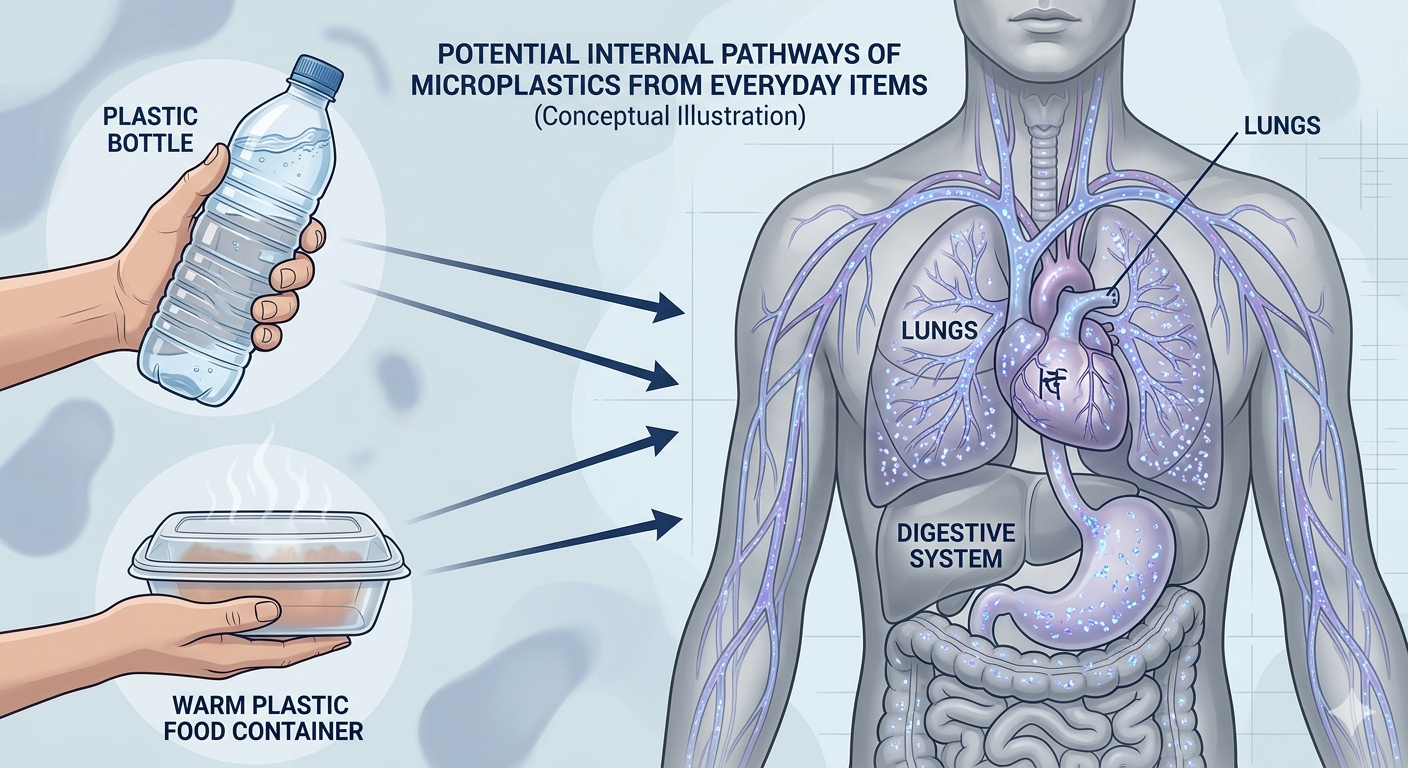

From Our Correspondent, Dhaka: Plastic bottles and containers have become an inseparable part of our daily lives. However, recent studies have revealed alarming data—water stored in plastic bottles and food heated in plastic containers via microwaves are releasing billions of tiny particles into our blood and cells. According to health experts, these invisible plastic particles are becoming a significant cause of long-term health risks for the human body.
What the Research Reveals
A study recently published in the Proceedings of the National Academy of Sciences (PNAS) found that a one-liter bottle of water contains an average of 240,000 plastic particles. Roughly 90% of these are classified as nanoplastics.
Microplastics vs. Nanoplastics
Microplastics: Particles ranging from 5 millimeters to 1 micrometer in size.

Nanoplastics: Particles smaller than 1 micrometer (1,000 times thinner than a human hair). Due to their size, they can enter the bloodstream directly and reach the lungs, heart, and even a developing fetus.
Risks of Heating Food in Plastic
Researchers at the University of Nebraska-Lincoln conducted an experiment last year. The results showed that heating food in a microwave using containers labeled “Food Grade” can release approximately 2.1 billion microplastics and 4.2 billion nanoplastics per square centimeter. High temperatures cause plastic polymers to break down and leach rapidly into the food.
Associated Health Risks
According to medical scientists, the accumulation of these tiny particles in the body can lead to several long-term complications:
Hormonal Imbalance: Chemicals in plastic (such as BPA) damage the endocrine system.
Inflammation and Cell Death: Nanoplastics penetrate cells and create oxidative stress, increasing the risk of cancer.
Cardiovascular Risk: Plastic particles can accumulate in blood vessels to form plaque, raising the likelihood of heart attacks and strokes.
How to Stay Safe
While it is difficult to eliminate plastic entirely, certain precautions can significantly reduce the risk:
Use Glass or Ceramic: Use glass or ceramic containers instead of plastic when heating food in the microwave.
Avoid Plastic Bottles: Develop a habit of using glass or stainless steel bottles instead of storing water in plastic for long periods.
Hot Food and Drinks: Avoid drinking tea in plastic cups or storing hot curry in plastic boxes.
According to experts, we are only beginning to understand the full impact of nanoplastics. To avoid a major health disaster in the future, it is essential to limit plastic usage starting today.
Follow businesstoday24.com for more updates and share your valuable opinions in the comments.