
1. Production and Supply Situation
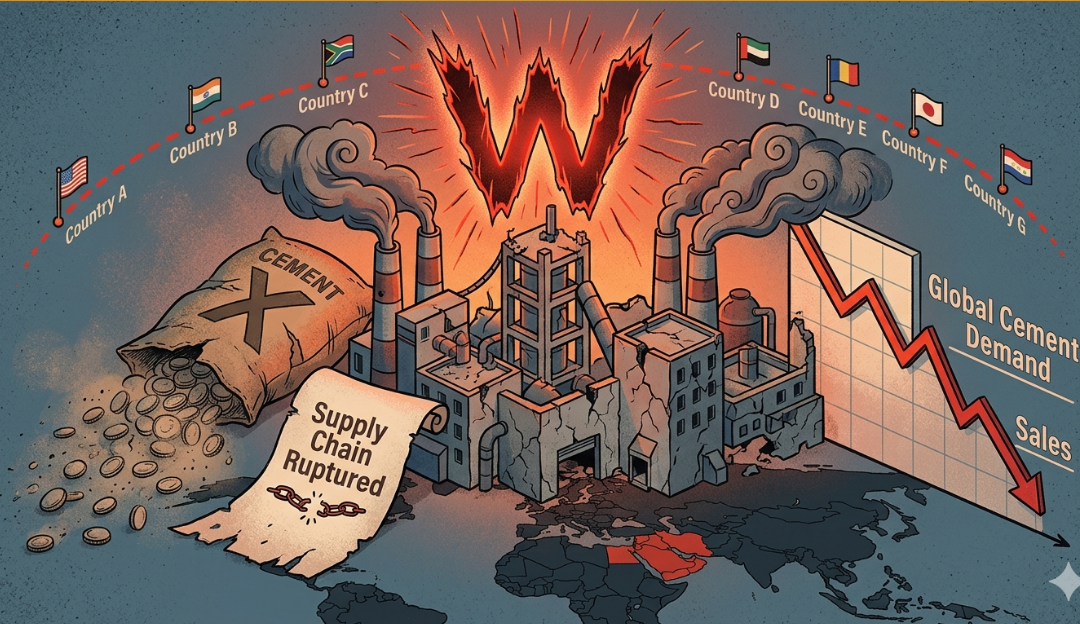
Iran is one of the world’s largest cement producers with an annual capacity of approximately 60 million tons. Due to the conflict, the country’s export of cement and clinker (the raw material for cement) has virtually ceased. This has placed countries like the UAE, Qatar, and Kuwait—which rely heavily on Iranian clinker—in a severe crisis.
Energy Crisis: Cement production is highly energy-intensive. Due to the war, the surge in natural gas and fuel oil prices has increased production costs by 15% to 20%.
Shipping Complications: Increased risks in the Strait of Hormuz have caused war risk insurance premiums to skyrocket, posing a major barrier to the international supply chain of cement and clinker.

2. Status of Global Cement Giants
Market leaders are adopting various strategies to navigate this crisis:
3. Market Rates and Inventory
The Middle East crisis has triggered a sharp jump in global cement prices:
Price Hike: Cement prices in Middle Eastern countries have increased by an average of 10% to 18%. Coastal markets are the most affected due to rising shipping costs.
Stock Situation: Most major dealers and suppliers have increased their inventory in anticipation of future uncertainty. However, many small-scale producers are seeing their stocks deplete rapidly as new clinker imports remain disrupted.
4. Impact on Construction
The high cost of cement, combined with the rising prices of steel and other materials, has led to a decline in new housing projects. Many large-scale infrastructure projects in South Asia and the Middle East are currently progressing at a slower pace. In particular, construction costs in India and Pakistan have risen significantly due to the energy crisis.
Global cement giants are now monitoring how long the Middle East instability persists. Market analysts fear a major recession in the housing and construction industries in the second half of 2026 if the situation remains unresolved.