
Kamrul Hasan
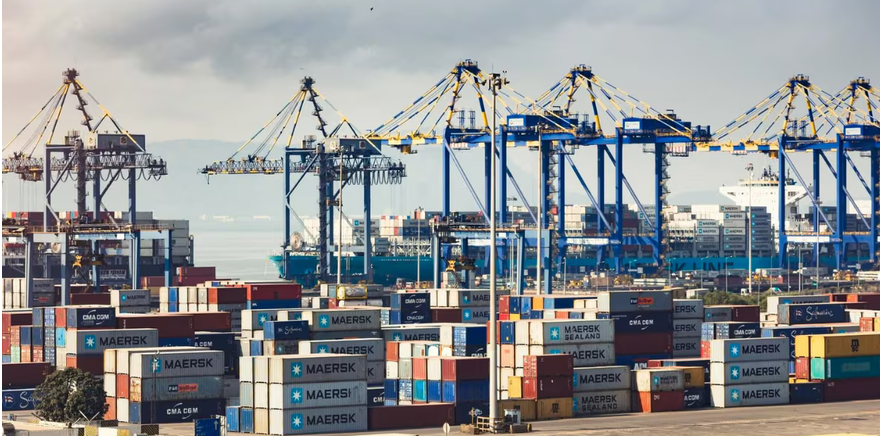
DUBAI: At the crossroads of strategic Indian Ocean trade routes and the expanding Indian economy, DP World has built a vast and highly efficient terminal network. Operating across both the eastern and western coasts of India, its footprint covers Jawaharlal Nehru Port (JNPT/Nhava Sheva) in Mumbai, Mundra in Gujarat, Chennai in Tamil Nadu, and the Vallarpadam International Container Transshipment Terminal in Cochin, Kerala. Moving beyond standalone jetty operations, DP World has transformed maritime infrastructure into an integrated, digitized, multimodal logistics ecosystem, establishing itself as a key driving force of the Indian supply chain sector.
Jawaharlal Nehru Port recently emerged as the world’s fastest-growing container port in the global top 30 rankings released by France-based shipping research and data platform Alphaliner. In the first half of 2026 (January to June), the port handled 4.4 million TEUs (twenty-foot equivalent units), reflecting a 13.6 percent year-on-year growth compared to the 3.87 million TEUs handled during the corresponding period last year.

Driven by strong import-export demand in India, expanded terminal capacity, and the diversion of certain Middle East-bound cargoes due to regional geopolitical tensions, the port climbed seven positions to secure 21st place globally. This historic surge has narrowed the gap between JNPT and Sri Lanka’s Port of Colombo, which ranks 20th globally, to just 41,000 TEUs.
Gujarat’s Mundra Port, where DP World also maintains a robust terminal presence, secured 26th place as the only other Indian gateway featured in the global top 30 list.
The foundation for this milestone was set by the Nhava Sheva International Container Terminal (NSICT) operated by DP World at JNPT. Commissioned as India’s first private public-private partnership (PPP) port project, the terminal was awarded to DP World on a build-operate-transfer (BOT) basis in July 1997 and commenced commercial operations in April 1999. Featuring a 600-meter quay, 15-meter draft, an annual handling capacity of 1.2 million TEUs, 8 high-capacity quay cranes, and 28 rubber-tyred gantry cranes, the terminal set new benchmarks for modern port operations across the country.
With the 30-year concession set to expire on July 2, 2027, DP World has formally applied for an extension, and discussions with the port authorities are currently underway. Hemant Kumar Ruia, Country Manager for the Indian Subcontinent at DP World, confirmed to reporters that an official proposal has been submitted to continue managing operations at the facility.
The operational footprint of DP World is most visible in terminal productivity and container handling turnaround. The company consistently maintains an average of 30 to 35 container moves per crane per hour, while reducing truck turnaround times from several hours down to approximately thirty minutes.
Meanwhile, operating Vallarpadam in Cochin—India’s first dedicated transshipment terminal—remains another key strategic accomplishment for DP World. The terminal enables mainline mother vessels to call directly on domestic shores, significantly curbing Indian exporters’ dependence on regional transshipment hubs like Colombo and Singapore.
Highlighting the real-world impact of this seamless logistics network, Mumbai-based veteran logistics entrepreneur Rajesh Shukla noted that clearing containers from ports and transporting them to manufacturing hubs previously involved chronic delays and severe road congestion. He observed that DP World expanded beyond the quay walls by connecting maritime terminals directly to Dedicated Freight Corridors (DFC) and Inland Container Depots (ICDs) via rail networks. As a result, paperless customs processing and real-time tracking have made freight movement substantially faster, more predictable, and cost-efficient.
DP World’s multi-layered integration and modernization drive across India demonstrates that seamlessly blending coastal terminals with inland rail and road corridors through cutting-edge technology delivers unmatched competitiveness and sustained volume growth on the global stage.
Follow and share your thoughts at businesstoday24.com.