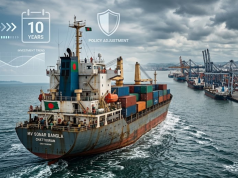
From Our Correspondent, DHAKA: An unequal battle has begun deep in the waters of the Bay of Bengal. On one side are the impacts of climate change. On the other is the aggressive use of sonar technology to locate and harvest fish with extreme precision. Caught between these two forces, Bangladesh’s marine fisheries are facing an existential threa.
Research indicates that the unchecked use of this technology is damaging the marine ecosystem so severely that the Bay of Bengal could become largely fishless in the near future.
 What Is Sonar Fishing and Why Is It Dangerous

Sonar, or Sound Navigation and Ranging, is a technology that uses sound waves to detect the exact location of fish underwater, including the size of shoals and their depth.
Using this technology, industrial trawlers can identify entire fish shoals in specific sea areas and harvest them indiscriminately. There is no distinction between small and large fish or between immature and breeding fish. As a result, the natural regeneration of marine species is being disrupted.
The impact on small-scale fishers has been severe. Out of approximately 270 to 280 large trawlers operating in deep-sea waters, nearly 70 are reportedly using sonar technology. This has allowed large trawlers to capture most of the deep-sea fish, while small fishers operating in coastal and shallow waters are increasingly returning empty-handed.
Alarming Findings From Research
A recent report by the research vessel R.V. Dr. Fridtjof Nansen reveals that excessive fishing, or overfishing, has already disrupted the natural balance of the marine ecosystem. Compared to 2018, the population of large fish species has declined at an alarming rate.
The natural breeding cycles of many fish species are being interrupted. As larger fish disappear, jellyfish populations have increased dramatically, a widely recognized indicator of an unhealthy marine environment.
On Tuesday, during a meeting at the state guest house Jamuna, Fisheries and Livestock Adviser Farida Akhter expressed serious concern over the use of sonar technology. She stated clearly that sonar fishing is an extremely aggressive method and warned that continued use would exhaust the country’s marine resources.
The government, she said, is preparing to impose a ban or strict regulatory controls on the use of this technology.
At the same meeting, Chief Adviser Muhammad Yunus emphasized that Bangladesh must prioritize the protection of its vast maritime resources before seeking to exploit them. He called for an end to indiscriminate fishing and stressed the need for a planned and sustainable fisheries management policy.
He also made it clear that there would be no compromise in protecting identified fishing nurseries, including those discovered beneath the Sundarbans region.
Marine scientist Professor Sayedur Rahman Chowdhury warned that while technology can enhance human capacity, its misuse against nature can be counterproductive. He cautioned that if sonar fishing is not stopped, the breeding of large marine fish could be permanently disrupted.
Protecting the Bay of Bengal is not only about saving fish. It is about safeguarding the food security and economic future of millions of people in Bangladesh. For this reason, halting the aggressive use of sonar technology has become an urgent necessity.