
From Our Correspondent, CHATTOGRAM: Although the reopening of the Suez Canal after disruptions in the Red Sea has brought some relief to global trade, a new concern is emerging for Bangladesh’s readymade garment sector. Experts warn that major European ports may soon face severe congestion as ships using two different routes arrive almost at the same time. This situation could seriously affect Bangladesh’s export flow to its largest market, Europe.
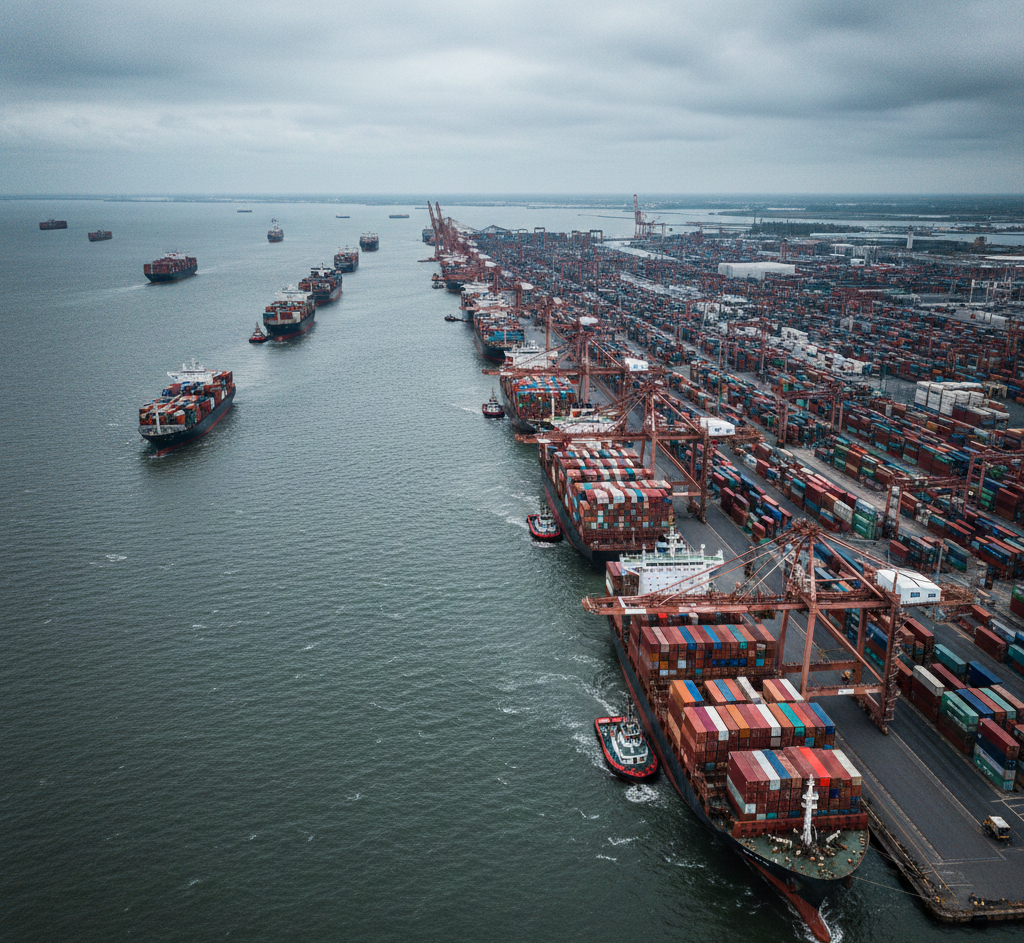
For the last few months, due to instability in the Red Sea, most cargo vessels carrying Bangladeshi goods to Europe were forced to take the longer route around the Cape of Good Hope in Africa. Now that the Suez Canal is again open, many ships have returned to this shorter route. Analysts say that within the next 10 to 15 days, vessels from both routes will start arriving together at major European ports such as Rotterdam, Hamburg and Antwerp. In shipping terms, this is known as “vessel bunching,” which often leads to heavy port congestion.
Three Major Impacts on Bangladesh’s Export Sector

- Lead Time Delays and Supply Pressure
Europe is the largest market for Bangladesh’s readymade garments. If ships are delayed at ports like Rotterdam or Hamburg, delivery to retailers will also be delayed. A top executive of a garment factory told BusinessToday24, “If our spring collection products do not reach buyers on time, we will face heavy discounts or even order cancellations.” Such delays can damage long-term relationships with international buyers. - Artificial Shortage of Empty Containers
If ships remain stuck at European ports, empty containers will not return to Bangladesh on time. This can create a serious shortage of export-ready empty containers at Chattogram port. As a result, the entire domestic logistics chain could slow down, making it difficult for exporters to ship goods even when production is ready. - Higher Transport Costs and Lower Profits
When ships are forced to wait at sea due to congestion, shipping lines often impose a “congestion surcharge.” There are already signs that international freight rates are rising. These extra costs will increase production expenses and reduce profit margins for garment exporters, who are already working with thin margins.
Reaction from Industry Leaders
Garment sector entrepreneurs say that just as they are trying to recover from political uncertainty and energy shortages, this new global logistics crisis has become another major challenge. Many factory owners are now considering expensive air freight to meet delivery deadlines. However, this option usually results in financial losses rather than profit.
Experts’ Advice
Economists suggest that exporters should start discussions with European buyers now to adjust delivery lead times. They also advise using alternative and less crowded ports where possible, to reduce the risk of severe delays. According to them, early planning and flexible logistics strategies will be crucial to protect Bangladesh’s garment exports from the impact of possible port congestion in Europe.