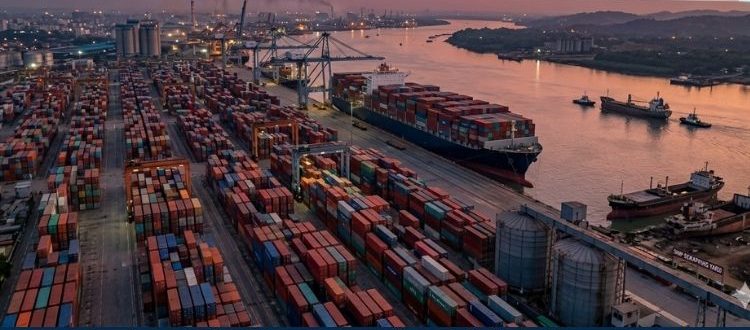

Kamrul Islam, Chattogram: In 2026, the global shipping industry is grappling with an unprecedented crisis. While the years 2021-22 were marked by a desperate shortage of vessels, the current landscape has shifted dramatically. Shipping capacity has surged so far beyond demand that major carriers are now fighting for survival in a flooded market.
A “Year of Overcapacity”
Peter Sand, Chief Analyst at Xeneta, describes 2026 as the definitive “Year of Overcapacity.” According to Sand, a massive influx of new vessels has created a market imbalance unseen in over a decade. Spot rates on key routes from the Far East to Europe and America have plummeted by as much as 70%, firmly establishing a “buyer’s market.”
Record-Breaking Supply Growth
Data from shipping analysts indicate that global container capacity has hit a record 32.3 to 33.6 million TEUs (Twenty-foot Equivalent Units) in 2026. This surge is the direct result of massive orders placed during the high-profit years of 2021 and 2022. The delivery of Ultra Large Container Vessels (ULCVs) has contributed to a 28% increase in total capacity over the last five years.
Drivers of the Surplus
Orderbook Deliveries: Major players like MSC, Maersk, and Hapag-Lloyd are receiving delivery of hundreds of vessels ordered post-pandemic.
Stagnant Demand: High inflation and interest rates in Europe and North America have dampened consumer spending, keeping international trade growth below 3%—far trailing the growth in vessel supply.
Geopolitical Factors: Even though regional conflicts in the Red Sea or the Strait of Hormuz have forced ships into longer routes, the sheer volume of new vessels has more than compensated for these delays.
Financial Risks and Freight Rate Collapse
The excess capacity has hit freight rates hard. Spot rates on primary trade lanes have dropped 30-40% compared to last year. With operational costs—particularly fuel and labor—remaining high, many carriers are expected to report significant financial losses in their 2026 annual balance sheets. This has triggered an aggressive “Price War” as companies slash rates to protect their market share.
Survival Strategies
To mitigate the impact, shipping lines are adopting several defensive measures:
- Slow Steaming: Reducing vessel speeds to save fuel and artificially extend transit times.
- Blank Sailing: Temporarily canceling scheduled voyages that are no longer profitable.
- Scrapping: Decommissioning and recycling vessels over 20 years old to meet carbon emission goals and reduce the active fleet.
Experts suggest that 2026 represents an “Economic Moment of Truth” for the maritime sector. Unless the global economy sees a dramatic uptick, this overcapacity could persist well into 2027, potentially leading to the bankruptcy or merger of smaller, less efficient shipping lines.
#ShippingCrisis2026 #GlobalTrade #MaritimeIndustry #Overcapacity #LogisticsNews #BusinessToday24 #FreightRates #SupplyChain #ShippingLines