By Kamrul Islam, CHATTOGRAM
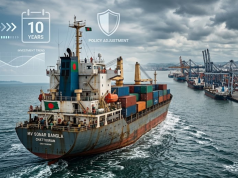
As the vast waters of the Indian Ocean continue to serve as the lifeblood of international trade, the resurgence of Somali piracy has emerged as a formidable threat to the global economy. Analyzing the hijackings of Bangladeshi vessels—specifically MV Abdullah and the earlier MV Jahan Moni—reveals that these are not merely the impulsive acts of a few armed youths. Instead, they are orchestrated by a sophisticated criminal network spanning from London to Dubai.
 The ‘White-Collar’ Criminals of the Blue Sea
Investigations by the International Maritime Organization (IMO) and INTERPOL indicate that Somali piracy operates on a highly organized three-tier model.
The first tier consists of local Somali logistics providers and the armed pirates on the ground. The second tier involves regional intermediaries based in cities like Nairobi or Djibouti, who maintain communication with ship owners. The third and most powerful tier comprises international financiers or ‘kingpins.’
A report by the United Nations Office on Drugs and Crime (UNODC) highlights that a significant portion of the ransom (approximately 30-50%) flows into the pockets of these international investors. These individuals often have access to shipping databases in major commercial hubs like London, allowing them to pinpoint which vessels lack armed guards and possess the highest insurance coverage.
Ransom: Millions Dropping from the Sky
The process of collecting ransom is as dramatic as any thriller. In the case of the hijacked Bangladeshi ships, final amounts were settled after grueling negotiations between the owners and the pirates.
According to maritime intelligence firm Dryad Global, pirates no longer accept simple bank transfers. They utilize a ‘cash drop’ method via small aircraft and parachutes. The payments must be in authentic US dollars, and pirates even employ their own ‘money scanner’ experts to ensure the notes are untraceable and genuine.
The Complex Maze of Negotiation
The ‘London Connection’ in Somali piracy remains an open secret. While insurance giants like Lloyd’s of London do not negotiate directly with pirates, they hire professional crisis management and negotiation firms. International legal experts note that while paying ransoms is prohibited in many jurisdictions, these transactions are often legalized under headings such as ‘crew safety money’ or ‘salvage costs.’ This has effectively turned piracy into a lucrative corporate business model.
A New Center of International Concern
In recent months, the focus of international navies has shifted toward the Red Sea due to Houthi rebel attacks, creating a ‘security vacuum’ off the Somali coast. The International Maritime Bureau (IMB) recently warned that Somali pirates are now hijacking fishing trawlers to use as ‘mother vessels,’ enabling them to launch operations much further into the deep sea.
Where Lies the Solution?
Experts argue that naval patrols alone cannot provide a permanent solution. Until the international money laundering trails are blocked and the ‘white-collar’ informants providing shipping data are identified, the Somali coast will remain a volatile zone for global trade.
Sources:
- International Maritime Bureau (IMB) Piracy Reporting Center.
- UNODC Reports 2024-26.
- Dryad Global Maritime Intelligence.