
From Our Corresondent, Chattogram: Bangladesh stands as one of the world’s leading cotton importers, spending approximately $4 to $5 billion annually on this vital raw material. Although premium American cotton is highly favored by Bangladeshi spinning mills due to its superior quality, importing it from the distant United States currently takes a lengthy 60 to 90 days for shipping and customs clearance.
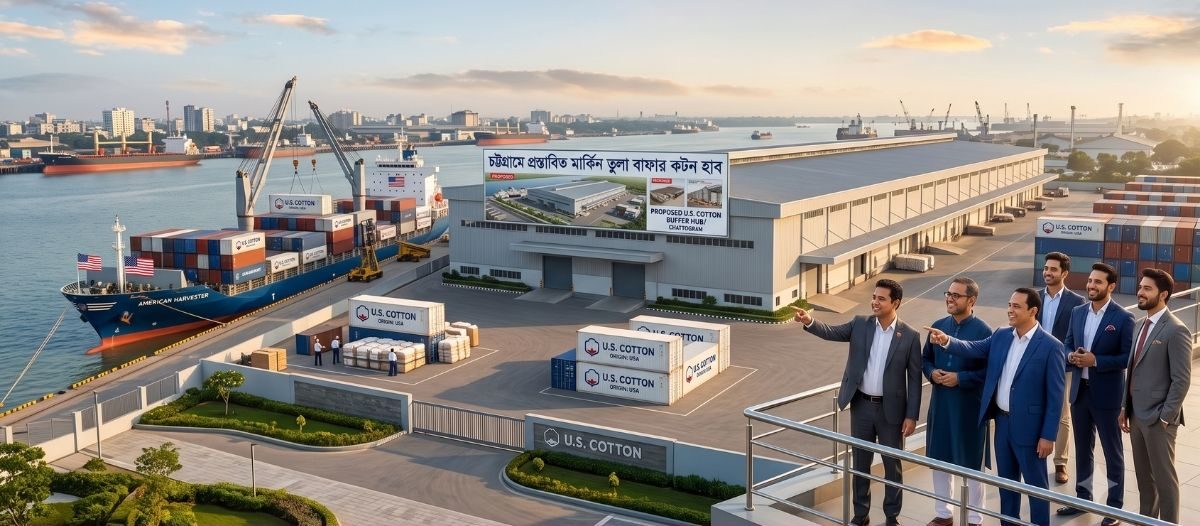
Establishing a US cotton buffer stock or terminal in Chattogram could drastically slash this lead time to just 2 to 3 days. This strategic move would optimize working capital for entrepreneurs and significantly boost the global competitiveness of Bangladesh’s ready-made garments (RMG) sector.
Leaders from the Bangladesh Garment Manufacturers and Exporters Association (BGMEA) and the Bangladesh Textile Mills Association (BTMA) believe that such a facility in Chattogram would not only save time and money but also shield the domestic textile and apparel industry from sudden price fluctuations in the international cotton market.
Despite massive demand from the domestic RMG industry, local cotton production accounts for a mere 2% to 3% of the total requirement, yielding around 200,000 to 250,000 bales annually. Consequently, the country relies on imports for the remaining 97% to 98% of its needs. Due to its top-tier quality, leading mills prefer high-grade US cotton, which accounts for about 11% or more of the country’s total import volume.
West Africa and other African nations remain the largest source of cotton for Bangladeshi spinning mills, supplying approximately 35% to 41% of total imports from countries like Benin, Mali, Burkina Faso, Mozambique, Nigeria, and Zimbabwe. African cotton is favored for its quality and competitive pricing. Meanwhile, India stands as the second-largest single-country source of cotton imports for Bangladesh due to its geographical proximity.
A leading director of the BTMA and a spinning mill owner stated that the long transit time for US cotton forces them to lock up substantial capital in banks for extended periods. He noted that a US cotton hub in Chattogram would allow mills to purchase raw materials instantly on an as-needed basis, sharply reducing lead times and cutting production costs significantly.
Echoing this sentiment, a former BGMEA director and successful apparel entrepreneur highlighted that fast fashion and quick delivery are critical in today’s global apparel market. Reducing cotton import times would enable exporters to ship garments much faster to meet buyer demands. He emphasized that a US cotton storage facility in Chattogram would mark a historic milestone in Bangladesh-US trade relations.
A prominent textile businessman from Chattogram and leader of the Metropolitan Chamber added that the capacity of the Chattogram Port has improved significantly. A US cotton terminal would protect the domestic industry from global market volatility while saving time and money. He urged the governments of both nations to make a swift and effective policy decision on this matter.
Increasing cotton imports from the US could also play a major role in narrowing the existing trade imbalance between Bangladesh and the United States. Furthermore, the Bangladesh government’s decision in 2023 to relax the long-standing “double fumigation” requirement for US cotton has already simplified direct port offloading. In this context, the proposal to set up a US cotton terminal in Chattogram is highly timely and pragmatic.
Industry stakeholders believe that launching this terminal or buffer stock facility will ensure raw material security for the country’s primary foreign currency-earning sector, driving a highly positive impact across the entire economy.
For more updates, please follow businesstoday24.com and share your thoughts in the comments section below.