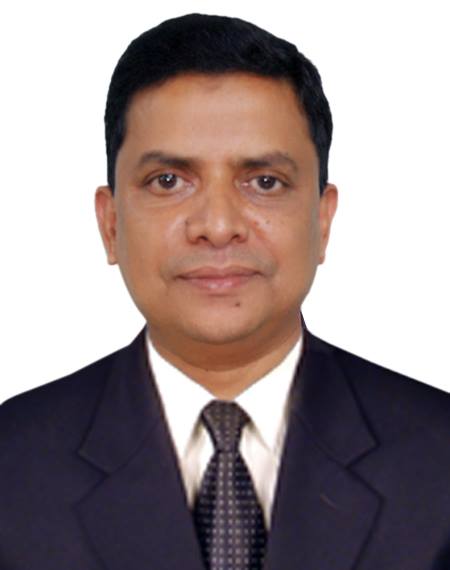

Captain Md. Salahuddin Chowdhury is a prominent figure and expert in the country’s maritime trade and shipping sector. Recently elected as the Chairman of the Bangladesh Shipping Agents’ Association (BSAA), this Master Mariner possesses a distinguished career recognized globally, not only in ship command but also in international maritime trade and surveying.
Having earned his Master Mariner degree from the United Kingdom, Captain Salahuddin is an Associate Fellow of ‘The Nautical Institute’ (AFNI), London. He serves as the CEO of Naaf Marine Services, the Country Representative for the world-renowned ‘Maconar Corporation,’ and is an authorized Marine Surveyor for significant flag states including Panama, Belize, and St. Vincent.
On Wednesday, he sat down with our special correspondent to discuss the current state, challenges, and future prospects of Bangladesh’s shipping sector.
1. Leadership Goals and Vision
Question: As the Chairman of the BSAA, what are your primary objectives for this term? Specifically, how do you plan to modernize this historic and vital organization?
Captain Md. Salahuddin Chowdhury: My primary goal is to transform the Bangladesh Shipping Agents’ Association into a modern, transparent, and effective professional body. This historic organization is a pillar of the nation’s foreign trade. To meet contemporary challenges, we are focusing on three pillars: full digitalization, ensuring good governance, and building strong coordination with stakeholders. We want to create an organizational structure where every member benefits from technology and bureaucratic delays are eliminated.
2. Enhancing Port Capacity
Question: Chittagong Port is the main gateway for the country’s import-export trade. What areas are you prioritizing to increase port capacity and accelerate container handling?
Captain Md. Salahuddin Chowdhury: Chittagong Port is the heart of our national economy. I am emphasizing three specific areas: first, infrastructural development to ensure adequate jetties, yards, and modern equipment; second, simplifying operational processes to reduce administrative complexities and ship turnaround time; and third, the optimal use of technology. Implementing automation and real-time tracking systems will ensure transparency and make our trade more competitive globally.
3. Addressing Operational Challenges
Question: What are the main obstacles currently faced in operating foreign vessels or working as shipping agents? Do you have specific proposals to resolve berthing delays or fee-related complexities?
Captain Md. Salahuddin Chowdhury: The main challenges are berthing delays, container congestion, and an over-reliance on manual processing. To resolve these, we have proposed the implementation of a ‘Single Window System’ and an integrated digital platform to the government. We are also advocating for a specific policy to ensure transparency in charge structures and fees. Many operational hurdles can be overcome by ensuring the swift removal of containers from port premises and strengthening cargo discharge at outer anchorage.
4. Digitalization and Paperless Shipping
Question: In the current global context, smart shipping management is essential. How will your association work toward making Bangladesh’s shipping sector fully digital and paperless?
Captain Md. Salahuddin Chowdhury: The global shipping industry is moving toward smart management, and we want Bangladesh to follow suit with a complete paperless system. We have initiated work on e-documentation and integrated data management systems. We are coordinating with relevant government agencies and port authorities to ensure that all clearances and official tasks for shipping agents can be completed via digital signatures and online portals. This will save time and significantly boost operational momentum.
5. Blue Economy and Bay Terminal
Question: Government mega-projects like the ‘Bay Terminal’ and deep-sea ports are expected to bring massive changes. How are shipping agents preparing to reap these benefits?
Captain Md. Salahuddin Chowdhury: The Bay Terminal and deep-sea ports will be game-changers for Bangladesh’s maritime trade. Shipping agents are modernizing to leverage this massive infrastructure. We are focusing on gaining the capacity to handle larger vessels and ensuring international compliance standards. Simultaneously, we are developing skilled manpower so that we can establish ourselves as a global maritime hub once these terminals are operational.
6. Policy Reform
Question: Do you believe reforms are needed in existing policies regarding licensing or operations for shipping agents?
Captain Md. Salahuddin Chowdhury: To survive in today’s competitive world, it is essential to make our existing policies more business-friendly and aligned with international standards. Specifically, the licensing process needs to be simplified to improve our standing in the ‘Ease of Doing Business’ index. We have proposed that the government update regulations to help local shipping agents stay competitive in the global market and attract large-scale investments.
7. Engaging the New Generation
Question: Skilled manpower is undeniable in this sector. Does the association have plans for academic or training initiatives to attract and train new professionals?
Captain Md. Salahuddin Chowdhury: Shipping is a highly technical and challenging sector where there is no substitute for skilled personnel. To attract the younger generation, we plan to create training programs, certification courses, and internship opportunities. We aim to make maritime education more practical through academic collaborations with various universities. Our goal is to build a trained and efficient youth workforce that will lead Bangladesh’s Blue Economy and shipping sector in the future.